Think about the cleaning you do now
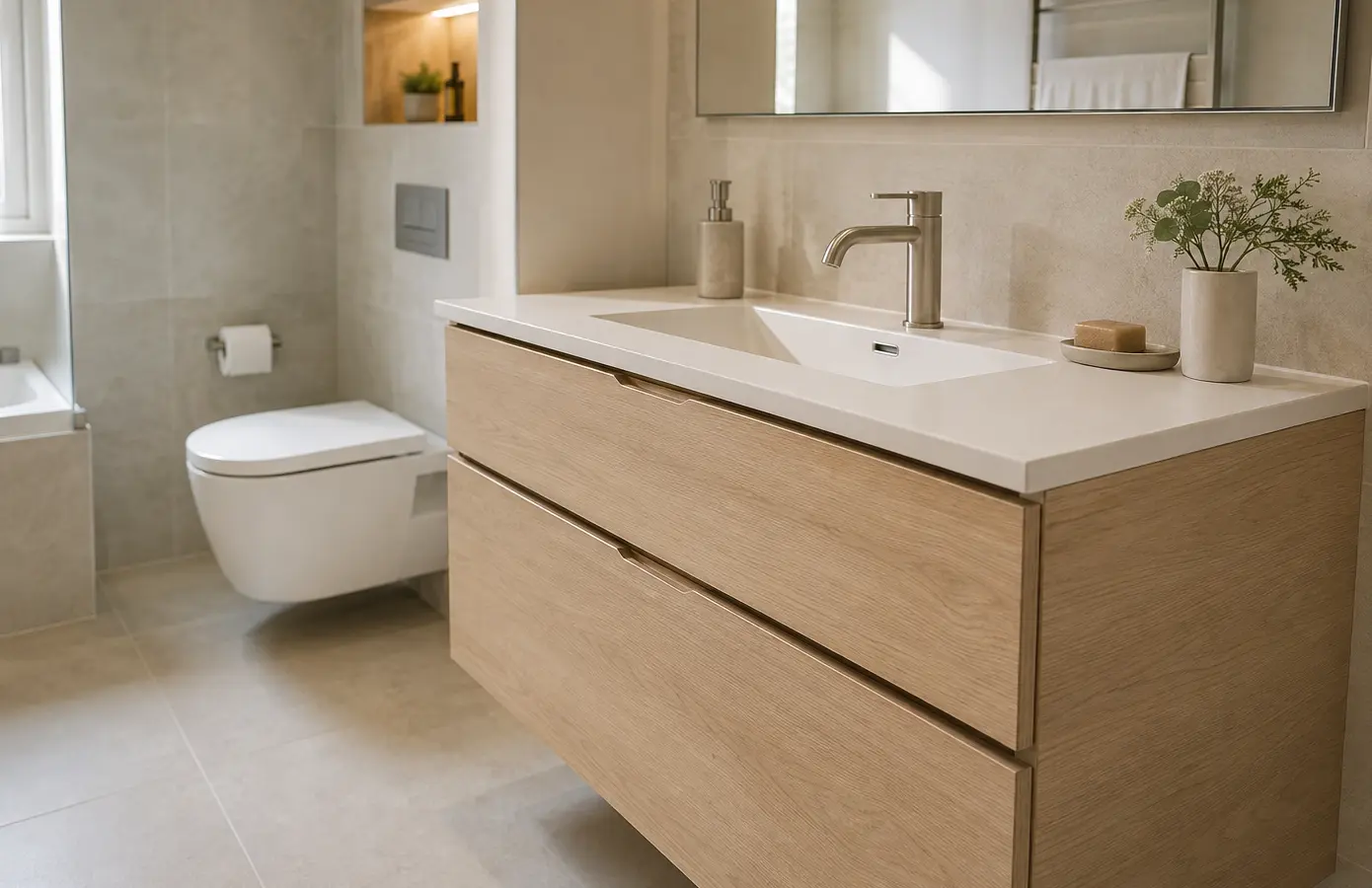
Before choosing new bathroom materials, notice which parts of the current room take the most effort to clean. It might be grout in the shower, a narrow gap behind the basin, textured furniture doors or an enclosure track that is difficult to reach. These details give you a practical starting point.
The easiest surface on a sample board may still be awkward in a poor layout. A smooth wall behind a deep cabinet can be hard to wipe, while a simple basin with accessible sides may be straightforward to maintain. Material and placement need to be considered together.
Be realistic about daily use. Every bathroom needs cleaning, ventilation and occasional maintenance. Avoid treating terms such as easy-clean as a promise that water marks, soap residue or damaged seals will never need attention. Look for a routine you can manage with products suitable for the chosen finish.
Compare wall panels and tiles
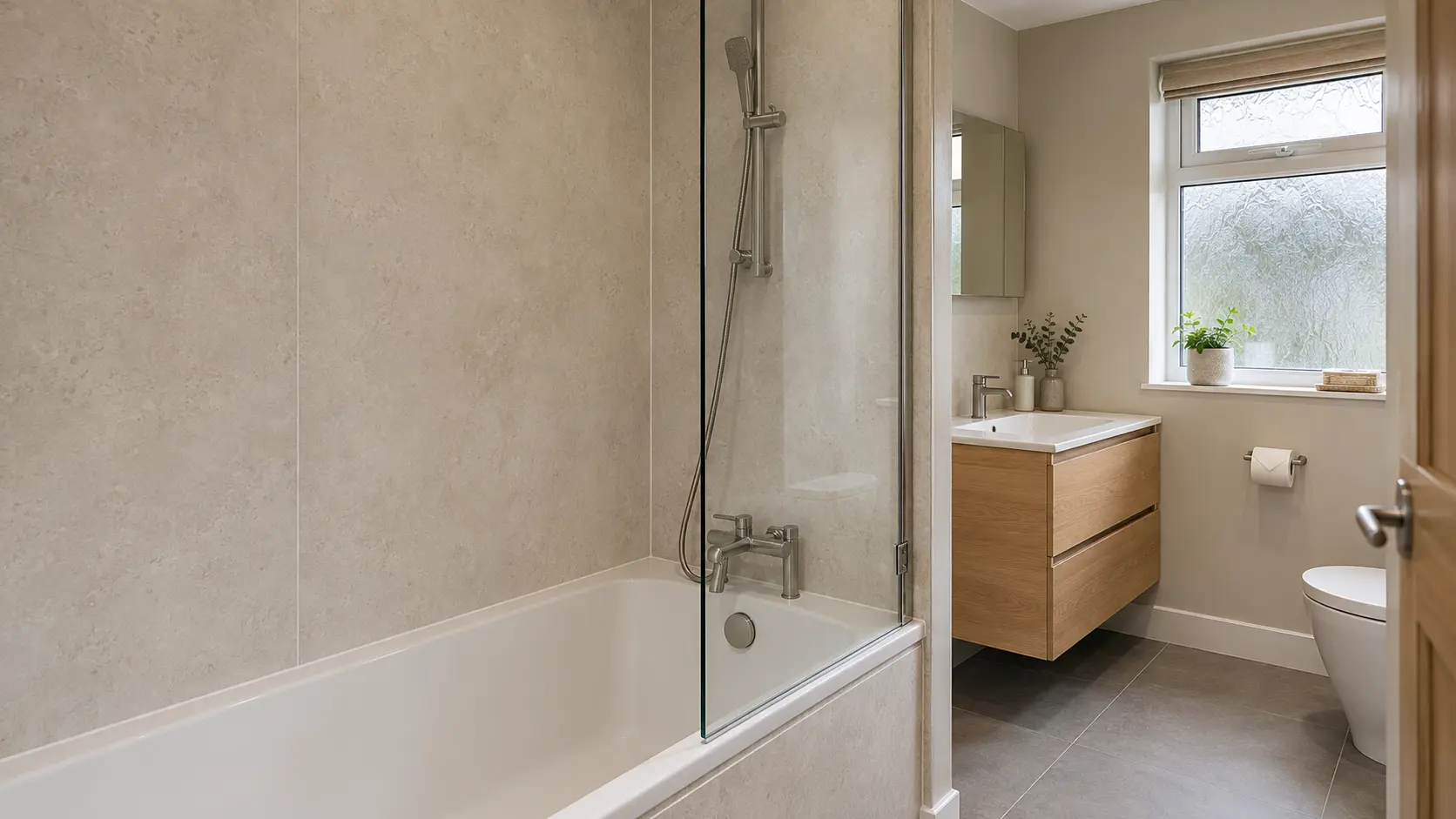
Wall panels provide broad surfaces and usually have fewer joints than a layout of small tiles. That can reduce the amount of grout to clean, but panel joins, corners and seals still matter. The surface must be cleaned according to the instructions for that particular product.
Tiles offer many sizes and finishes. Larger tiles can reduce the number of grout lines, although the way they are cut around the room affects the result. The grout and any sealant need appropriate care, and rough or deeply textured finishes may hold residue differently from smoother ones.
Ask to see the care information alongside the sample. A stone-effect surface can be made from different materials, with different cleaning needs. Its appearance does not tell you whether it needs sealing or which cleaners are safe. The exact product specification is more useful than a general description such as natural look.
Choose basin and toilet shapes you can reach
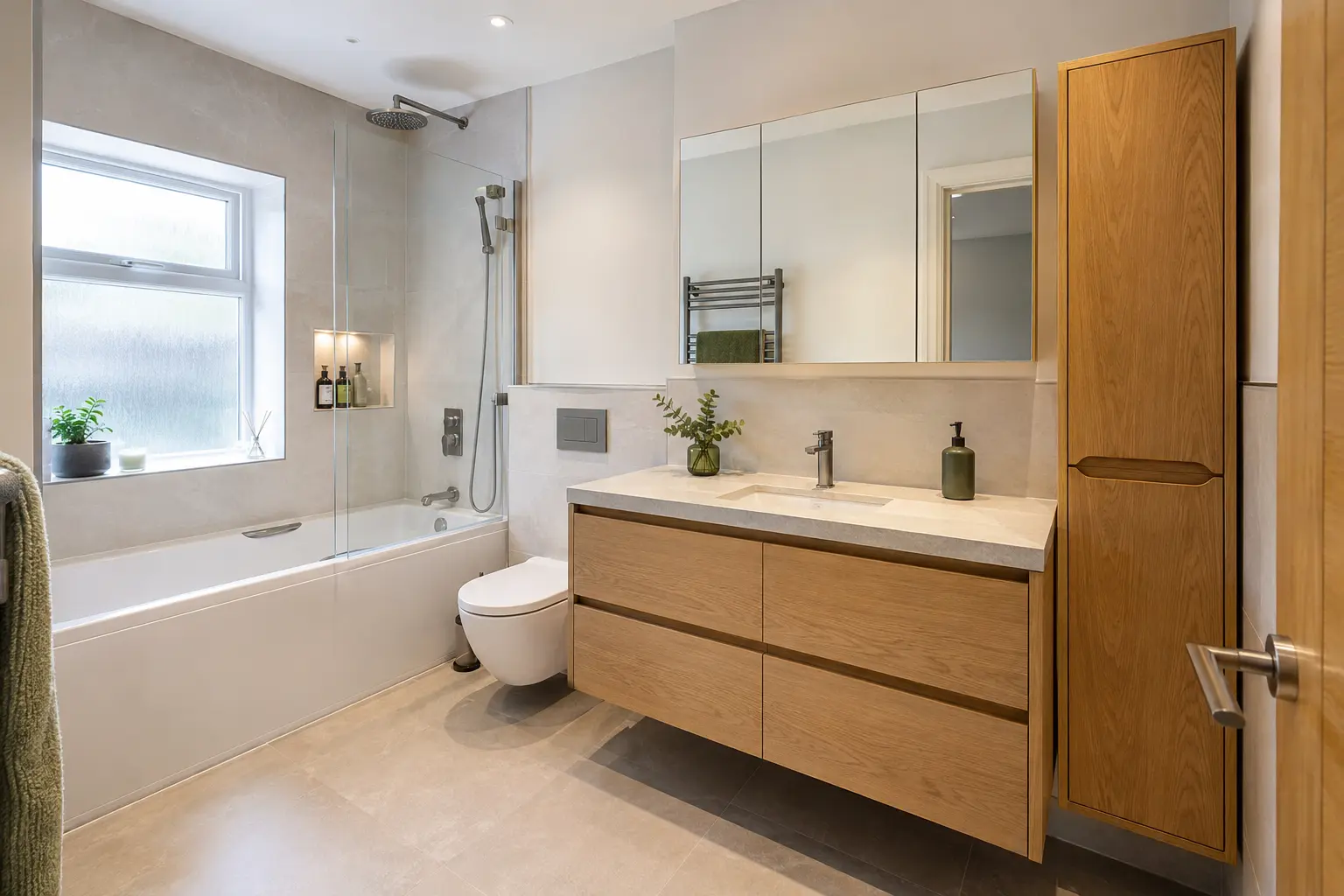
Look at the spaces around taps, behind the toilet and along the basin edge. Deep grooves, tight gaps and awkward corners can make a routine wipe take longer. A simpler shape may be easier to reach without needing special brushes for every recess.
The gap between the basin and wall matters too. If water regularly splashes into a narrow space, you need a practical way to clean and dry it. A tap should suit the basin so the water lands usefully rather than creating unnecessary splash around the rim.
Wall-hung fittings expose more floor, which can help with cleaning underneath. They also have fixing and service-access requirements. Ask how concealed parts can be reached for repairs. Easy floor cleaning should not come at the cost of making a simple maintenance job unnecessarily disruptive.
For help with your plans, see Bathroom Design in Bangor. At your home appointment, we check the room and the work needed before preparing your quote.
Keep furniture practical
Plain-front drawers and doors can be simpler to wipe than heavily detailed fronts. Handles should be easy to grip and clean around. Check the inside of the cabinet too, because awkward shelves and pipe cut-outs can make it difficult to keep the storage tidy.
Choose furniture intended for bathroom use and follow its care instructions. That does not mean it should be regularly soaked by the shower. Keep it outside the main spray area and wipe spills as directed. A wood-effect finish may need different care from painted furniture or solid timber.
Allow enough space to open the furniture fully. A drawer that only opens halfway because it meets the toilet makes both storage and cleaning awkward. The layout should give you access to the corners and the floor without moving fixtures or twisting into a narrow gap.
Look closely at screens, trays and flooring
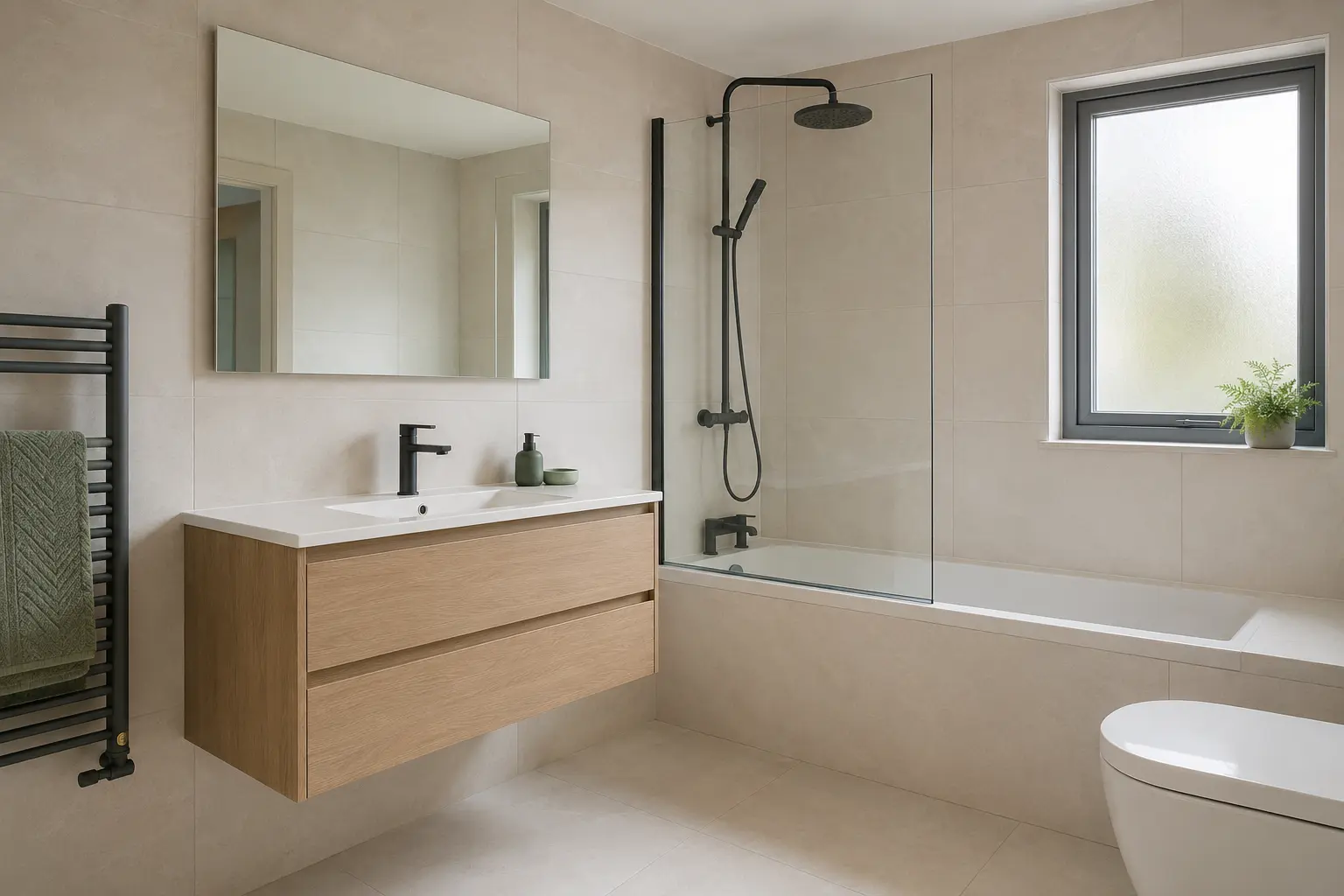
A shower screen may have an easy-clean coating, but it still needs the maker’s recommended routine. Check how overlapping glass, hinges, tracks and seals can be reached. Some doors provide better access for cleaning than others, so inspect the mechanism as well as the front view.
Trays and flooring need to suit wet bathroom use. Texture, drainage and cleaning requirements all matter. A very smooth-looking surface is not automatically the best choice, and a textured surface is not automatically impossible to clean. Compare the actual product information and your household’s needs.
Make sure the drain can be accessed for routine cleaning. Hair and residue do not disappear because the drain cover is discreet. Ask how removable parts work and keep the instructions. An attractive drain detail should still be understandable to the person maintaining the bathroom.
Read our related guide: How to Maintain Shower Panels
Use the quote and handover to confirm care needs
When planning your Bangor bathroom, ask for the chosen wall, floor and furniture products to be named in the quote. This makes it easier to check their care guidance and compare alternatives. Broad descriptions can hide differences between products that look almost identical in photographs.
Choose cleaning access during design rather than trying to solve it afterwards. Leave reachable spaces, keep dry storage out of the spray and avoid unnecessary ledges that collect water. Small layout improvements can save more regular effort than an expensive finish chosen only for an advertised coating.
At handover, collect the product details and ask which cleaners should be avoided. Find out how to check seals and who to contact if a fitting becomes loose or starts leaking. An easy-care bathroom combines suitable materials, a workable layout and a simple routine that you can keep up.
Product or public guidance: Multipanel: product care and fitting questions.