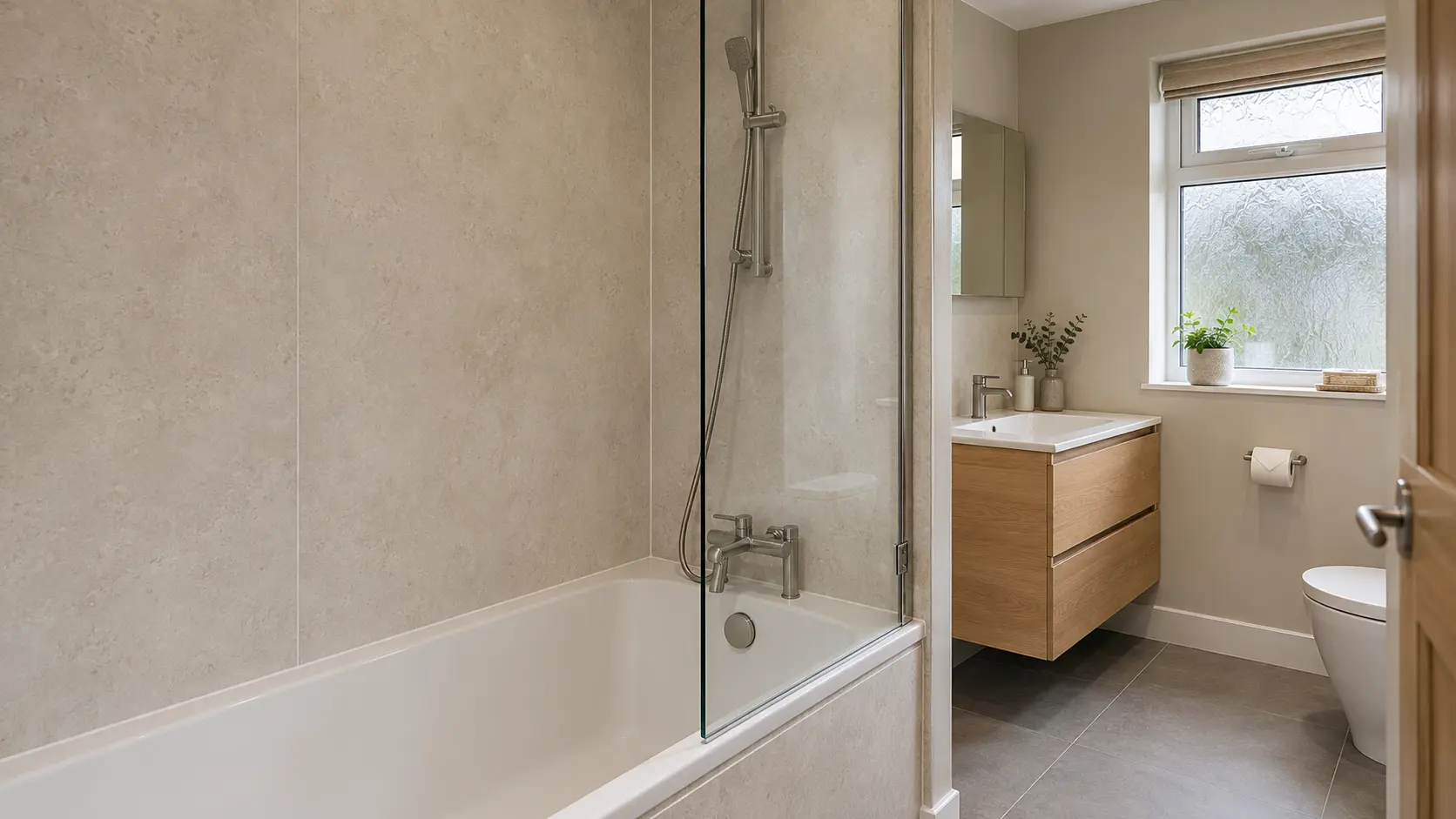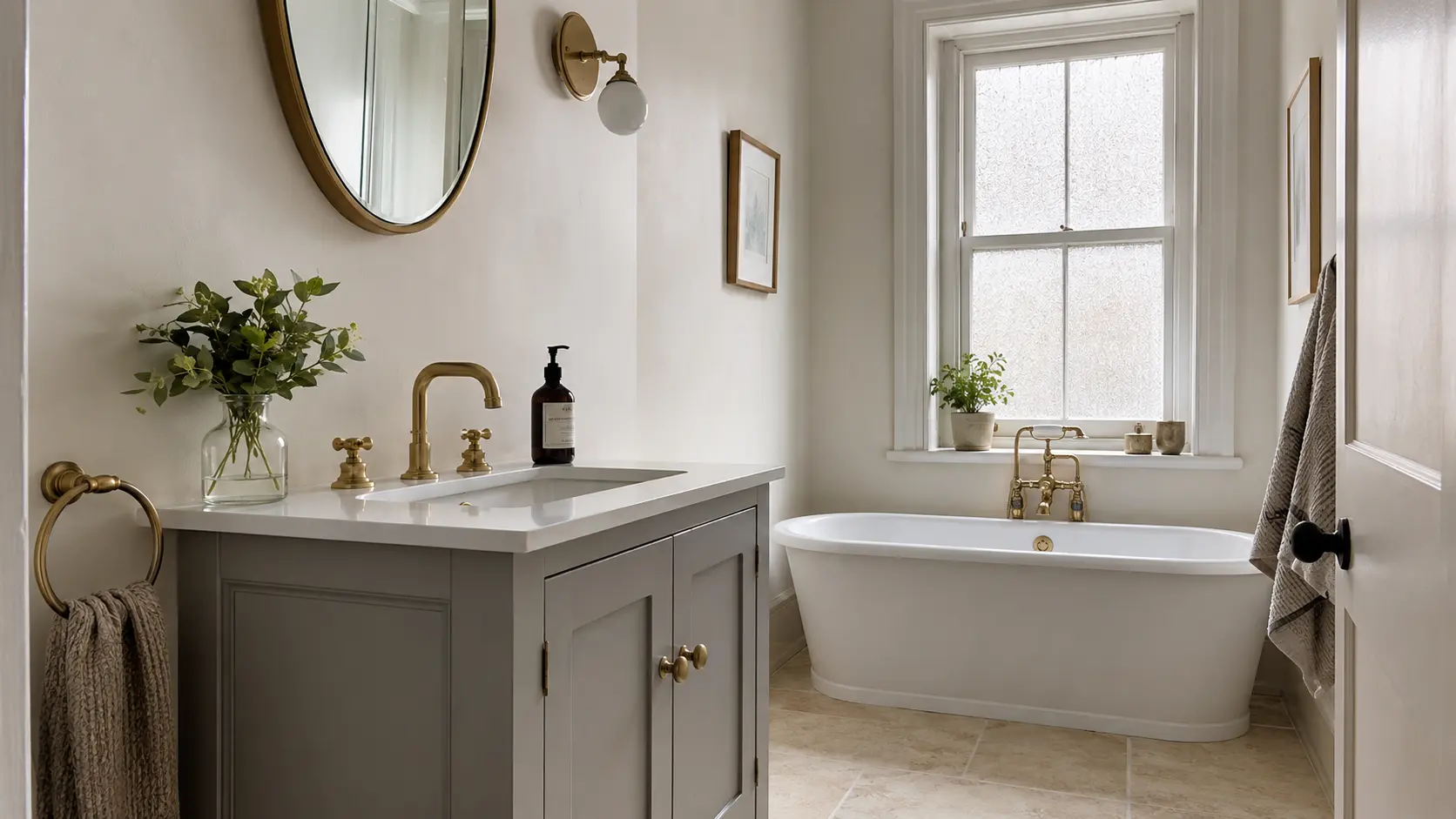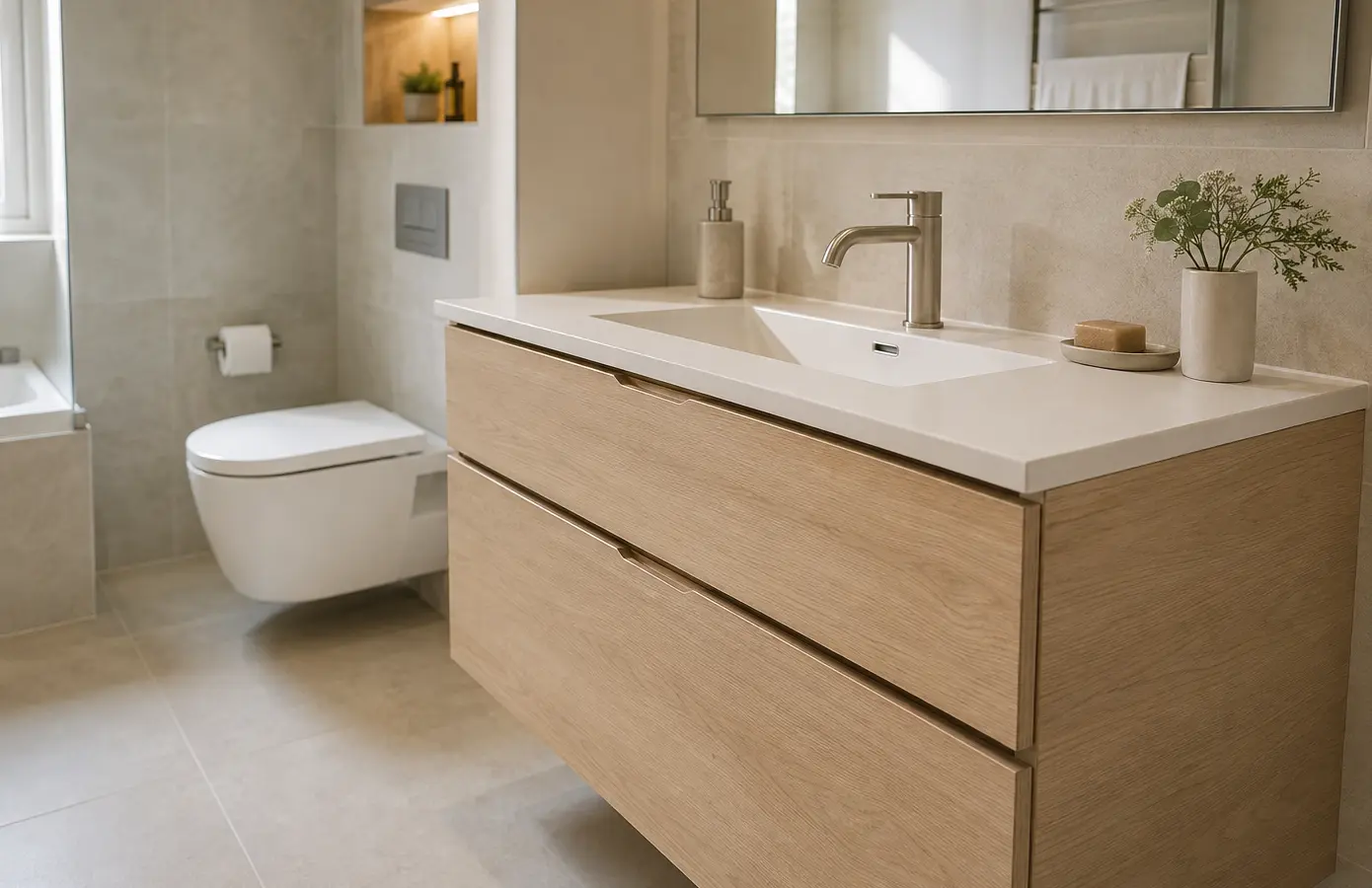
Understand where the moisture is coming from
Condensation happens when moist air meets a colder surface and water collects on it. In a bathroom, showers and baths add moisture to the air, so windows, mirrors and outside walls can become wet. A little mist after showering is familiar, but persistent wet surfaces or recurring mould need attention.
Do not assume every damp patch is condensation. A leaking pipe, damaged seal or water entering through the building can produce a different problem. Note where the damp appears, whether it follows shower use and whether it persists when the room has been dry for some time.
Photographs and a short record can help explain the pattern to a suitable professional. If you see a leak, soft flooring or spreading damage, arrange an inspection rather than hiding it behind new panels. The cause needs to be understood before a decorative finish can provide a lasting improvement.
Help moist air leave the bathroom
Ventilation needs a route for moist air to leave the room. An extractor fan should be suitable for the bathroom and carry moist air outside through suitable ducting. A visible fan grille does not prove that the fan is working effectively or that the ventilation pipe behind it is clear and properly arranged.
Use the fan as intended during and after bathing, following its controls and instructions. If it has stopped working, makes an unusual noise or seems ineffective, have it checked. Electrical work should be handled by a suitably qualified person rather than investigated by dismantling the fitting yourself.
Where a window can be used safely, opening it can help release moisture. Keep any designed ventilation openings clear. The right routine depends on the room and weather, so the aim is effective ventilation rather than simply leaving a bathroom permanently cold with a wide-open window.
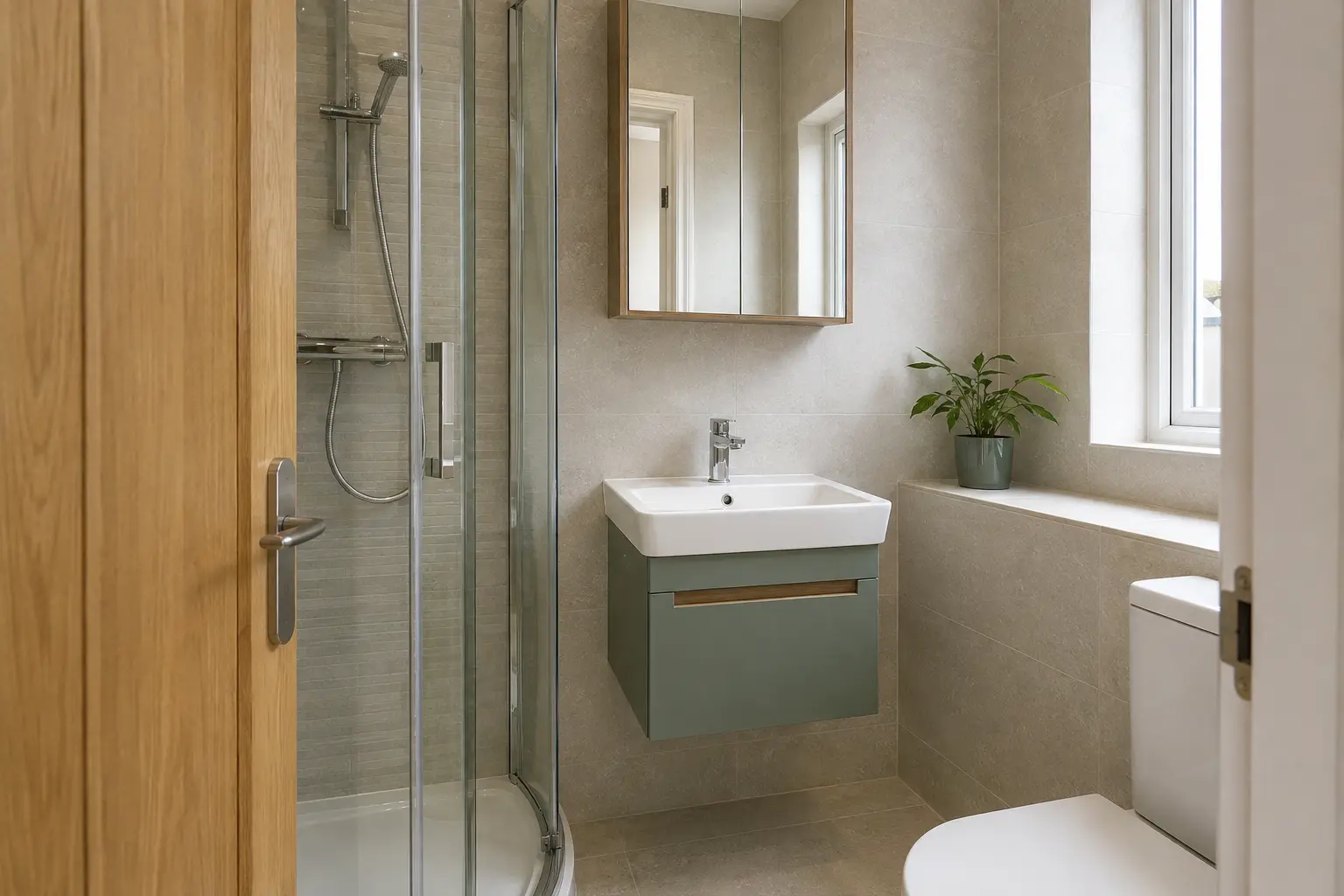
Reduce water left on surfaces
After showering, remove standing water from reachable glass and other surfaces where the product instructions allow it. A suitable squeegee or soft cloth can reduce the amount left to evaporate. This is a simple daily habit, not a replacement for a working fan or sound waterproofing.
Hang towels with enough space to dry instead of leaving them in a damp pile. Avoid packing wet fabric into a closed cabinet. If clothes are dried indoors, think about where their moisture goes and whether the room’s ventilation can handle that extra load.
Keep furniture and stored items from blocking ventilation paths or hiding repeatedly wet areas. A cabinet packed tightly against a damp corner can make the problem harder to notice. Cleaning and drying should be possible without moving half the bathroom every time you use it.
For help with your plans, see Bathroom Refurbishment in Bangor. At your home appointment, we check the room and the work needed before preparing your quote.
Look at heating and cold surfaces
Cold surfaces are more likely to collect condensation when the air is moist. A bathroom that swings between a hot shower and long periods of cold may be harder to keep dry. Discuss a sensible heating and ventilation arrangement rather than relying on short bursts of heat alone.
Persistent cold or damp patches can also reflect a problem with the building. A professional may need to assess insulation, ventilation or water entry, depending on the pattern. Replacing the visible wall finish without addressing that cause can leave the new bathroom with the same problem.
Avoid blocking vents in an attempt to keep the room warmer. The balance between warmth and moisture removal matters. If you are unsure why the room remains wet despite normal ventilation, get advice based on the actual bathroom rather than repeatedly changing cleaning products.
Deal with recurring mould and damage properly
Mould that keeps returning is a sign that the conditions causing it have not been resolved. Follow appropriate product and public health guidance for cleaning, and avoid mixing cleaning chemicals. Extensive growth, persistent damp or concerns about health call for suitable professional advice rather than stronger improvised cleaning methods.
Check seals, corners and the area around the bath or tray for visible deterioration. A damaged joint can let water reach places it should not. Report the issue and have the cause checked; simply adding another line of sealant over a failed joint may not repair the underlying problem.
If the home is rented, report persistent damp or faulty ventilation to the landlord through the appropriate process. Keep records of what you have observed and reported. The website’s general advice cannot determine who is responsible for a particular defect or replace an inspection of the property.
Read our related guide: How to Maintain Shower Panels
Include ventilation in a bathroom refurbishment
A new bathroom is a good opportunity to assess how moisture leaves the room. Ask whether the existing fan, duct route and controls are suitable, and have any agreed changes listed in the installation quote. A new mirror or fresh wall panels will not fix poor extraction by themselves.
Choose storage and fittings that leave surfaces accessible for wiping and checking. Keep the shower layout from regularly soaking furniture or areas intended to stay dry. Practical cleaning access and sensible water control support ventilation rather than competing with it.
For a Bangor home appointment, explain where condensation or damp appears and what has already been tried. The fitter can assess the bathroom work, while building or ventilation defects may need additional specialist advice. The useful outcome is a clear explanation of the cause and the work needed, not just a temporarily cleaner-looking wall.
Product or public guidance: nidirect: damp and ventilation in the home.