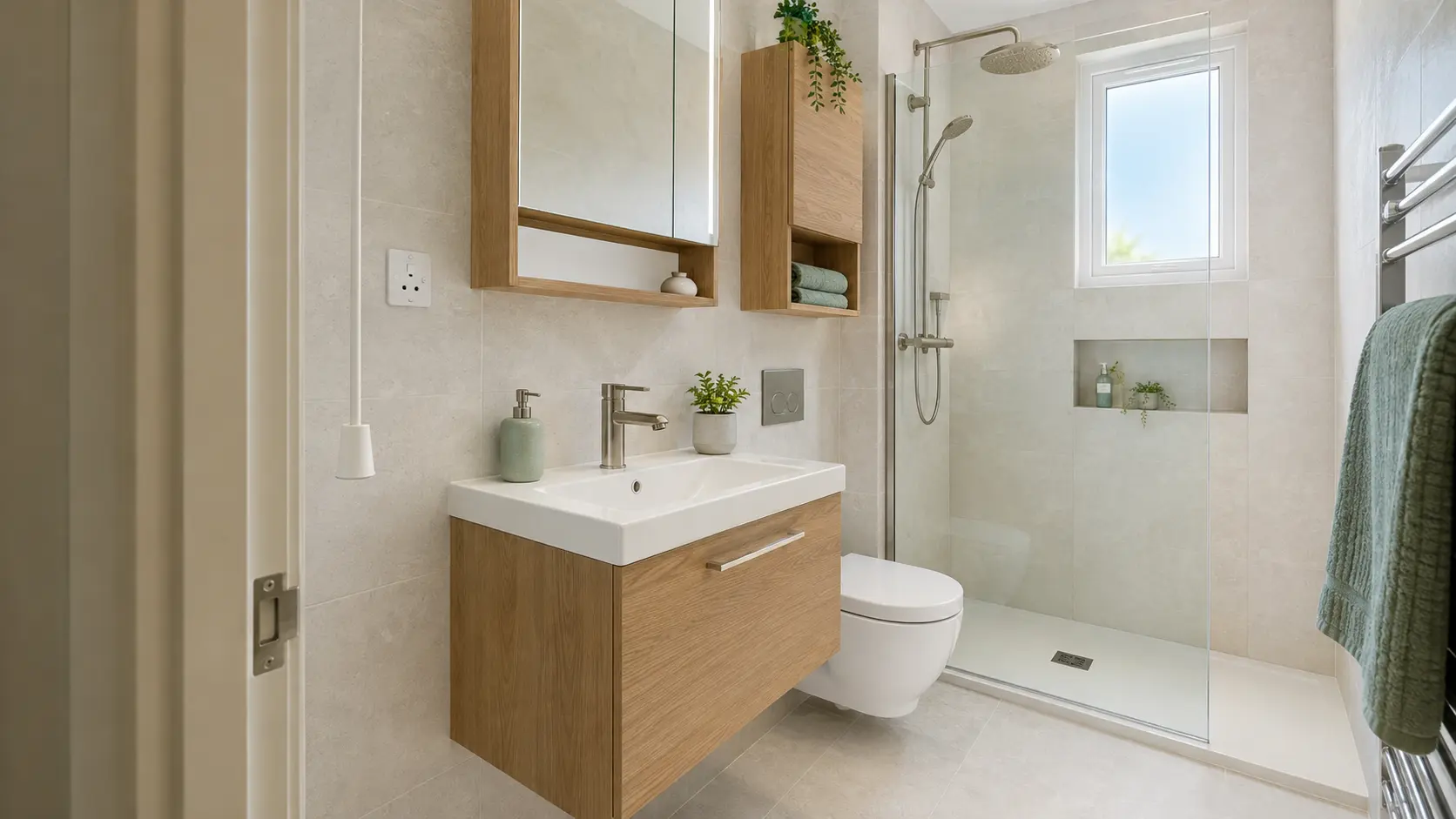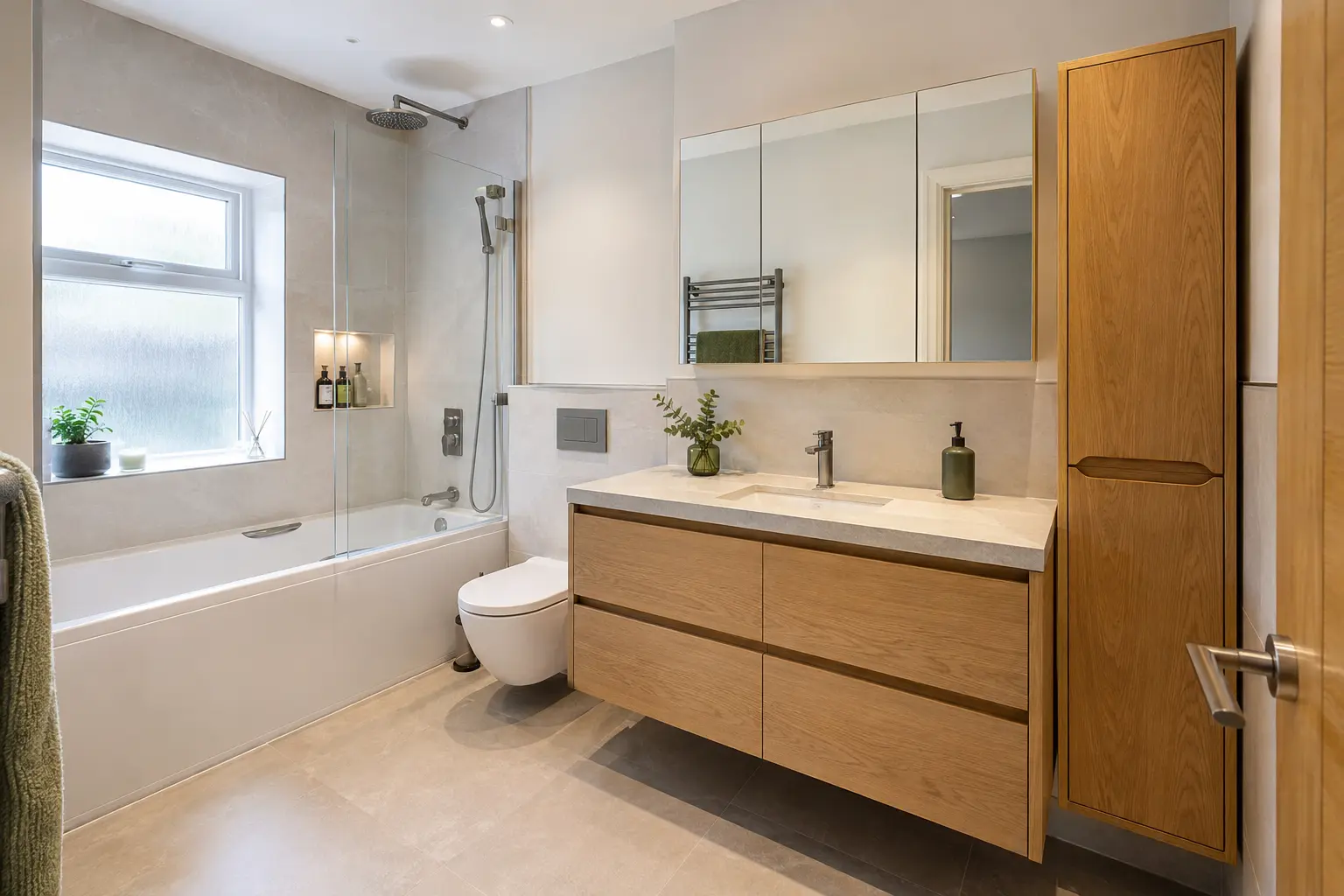
List what needs to stay in the en-suite
Start with the items you use each morning and evening. Toothbrushes, shaving products, skincare and shower bottles need convenient places. Spare towels, cleaning supplies and unopened bottles do not all have to live in the same small room. Sorting these groups first makes it easier to choose storage that holds what you need.
Look at where things collect now. Bottles on the basin suggest storage is needed nearby. Products on the shower floor need a shelf within reach. A chair or door hook piled with towels may mean there is no suitable drying place. Each of these problems needs a different answer.
Measure the available spaces after allowing for movement. A slim cupboard that fits beside the toilet may still make sitting down uncomfortable. Storage should support the layout, not take every remaining gap just because a product happens to fit there.
Choose a vanity by its usable space
A vanity can put storage under the basin without adding a separate cupboard. Drawers usually let you see more of the contents at once, while doors may work better for taller items. Open the display model if possible and look at the inside, including the space taken by the curved waste pipe below the basin.
Check the basin size as carefully as the cabinet. A very shallow basin can splash more during normal handwashing if the tap and bowl do not suit each other. You also need enough surface for the items you use without balancing them along a narrow edge.
Wall-hung furniture exposes more floor and can make wiping underneath easier. It still needs a suitable wall fixing and enough depth for useful storage. A floor-standing vanity may suit another room better. Choose the arrangement that fits the wall, plumbing and cleaning routine rather than assuming one style is always superior.
Use the wall above the basin
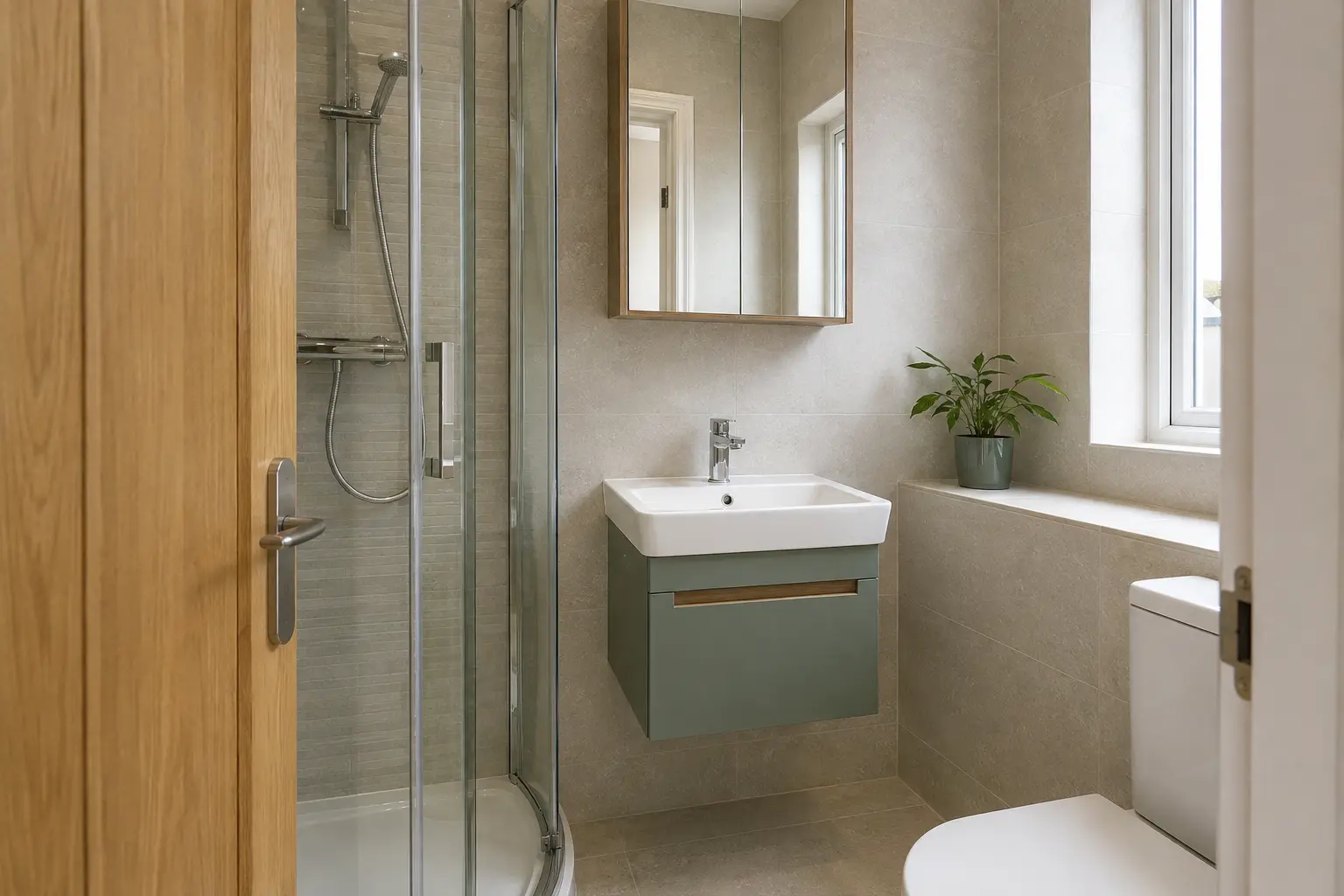
A mirrored cabinet combines two useful things in one place. Shallow shelves can hold everyday bottles at eye level, leaving the basin clearer. Check whether the shelf heights can be adjusted and whether the door opens without hitting a nearby wall, light or shower screen.
A cabinet should not project so far that you lean around it to use the basin. Stand in front of the proposed position and think about face washing as well as looking in the mirror. The bottom edge, tap height and basin depth all affect comfort.
Recessing a cabinet into the wall can reduce its projection, but the wall must be suitable. Pipes, wiring and structural parts may prevent it. Ask about this early if you want a recessed unit; it should not be assumed after the wall finish has already been chosen.
For help with your plans, see Bathroom Storage for Bangor Homes. At your home appointment, we check the room and the work needed before preparing your quote.
Put shower products within reach
A shower shelf should hold the bottles you actually use without narrowing the entrance. Position it where you can reach it comfortably and where it is not likely to be knocked when turning. A ledge that looks neat in a photograph may be too small for a pump bottle or family-sized shampoo.
A niche is a shelf recessed into the wall. It needs sufficient depth and a properly detailed waterproof finish, so it is part of the shower construction rather than a last-minute cut-out. The installer must check what is behind the wall before including one in the quote.
A surface-mounted shelf can be a simpler choice where a niche will not work. Fixings still need to suit the wall and wet area. Avoid placing bottles on the tray floor if doing so makes standing or cleaning awkward. The aim is easy access without another obstacle underfoot.
Give towels a dry place
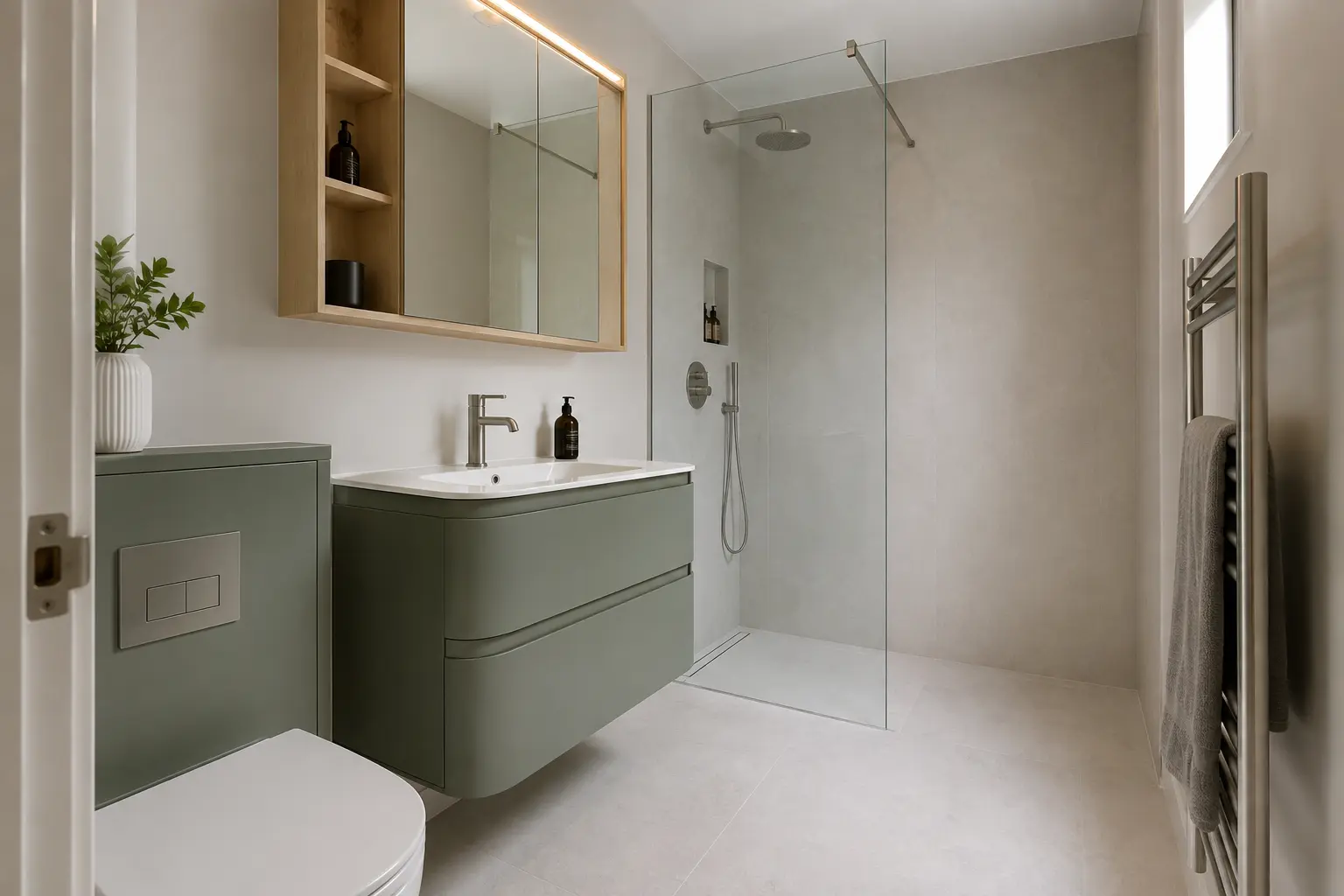
Separate clean towel storage from the place used to dry a damp towel. A cupboard can keep spares tidy, but putting damp fabric straight into a closed unit is not a good drying routine. Allow a towel to hang with enough space around it and keep it clear of the shower spray.
A tall cabinet may offer plenty of shelves, although its footprint and door opening can overwhelm a small en-suite. Sometimes a shallow cupboard outside the room is a better home for spare towels. This leaves the bathroom storage available for items that must be close to the basin and shower.
Hooks can help where wall space is limited, but check their height and position. A hanging towel should not cover an electrical control, drag on the floor or block the door. Small placement decisions make storage more useful than simply adding another rail.
Read our related guide: Bathroom Ideas for a Bangor Apartment
Check cleaning and maintenance before ordering
Bathroom furniture still needs care. Read the product instructions for splashes, cleaning products and drying spills. Wood-effect finishes may look similar while having different construction and care requirements. Do not treat a cabinet door as if it were a waterproof shower panel.
Leave access to valves, traps and other parts that may need servicing. A cupboard full of products should not hide the only way to turn off a leaking tap. Ask the fitter where access panels or removable sections will be located.
At the home appointment, bring your storage list and show the products that are hardest to put away. The fitting plan can then include the right drawers, shelf heights and clearances. Useful storage is measured by how easily you can find, use and replace things, rather than by how many cabinets the room contains.